Day 25: 23 februari 2006
Kumasi

The night was short. The traffic on the road in front of the hotel only reduced after midnight, but started again before sunrise. After a shower I walked around, bought some pastries for breakfast and relaxed a little bit. After Emmanuel arrived, we drove through the city with a lot of air pollution. Our first stop was the Kings Palace, but due to ceremonies on Thursdays, it was not open to the public, so I only could watch it from the outside. It's an enormous complex and it was a pity I couldn't watch the inside.
We drove on through all kind of back streets, due to some road works. We also passed the wood factory of SBS. All day big trees arrive here by trucks. The trees come from forest in a wide area around Kumasi. We drove on to cultural center where we first visited a small museum about the Ashanti history. For many years the Ashanti was the most powerful tribe in Ghana. They still have their own king, but lost a lot of their influence. At the museum a lot of historical artifacts are on display like wooden chairs, used by kings, war coats with a lot of amulets, which protected the bearer from gun shots. There is also a setting of a cooking place and the way kings sat down; they were not allowed to put their feet on the ground. The cooking was always done by a man, because the kings thought that women might poison them. The king was allowed to marry more than one woman. At the museum is also a stretcher on which the king was transported.
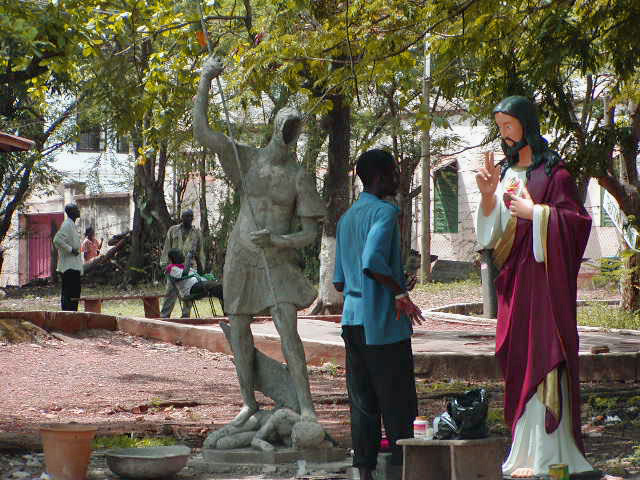
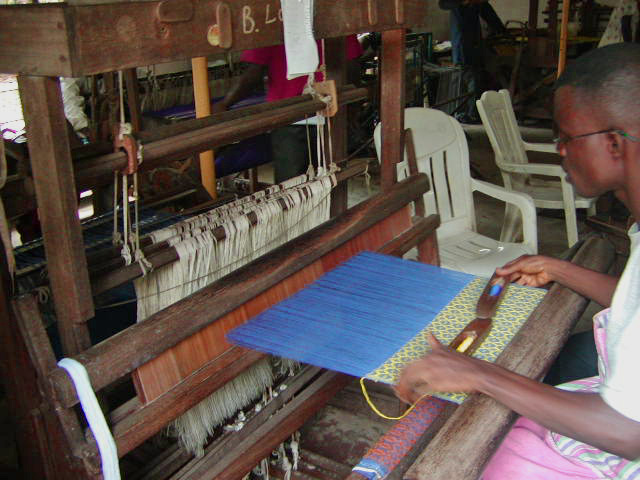
Of course there are a lot of craft shops and places where artists make their craft. This varies from clothing, jewellery and stone and wooden statues. I also visited a place where they were weaving. There are two kinds of woven material. One is done by a predefined patrons and the other is done just from the head. I bought a tablecloth for 120.000 cedis (12 euro).
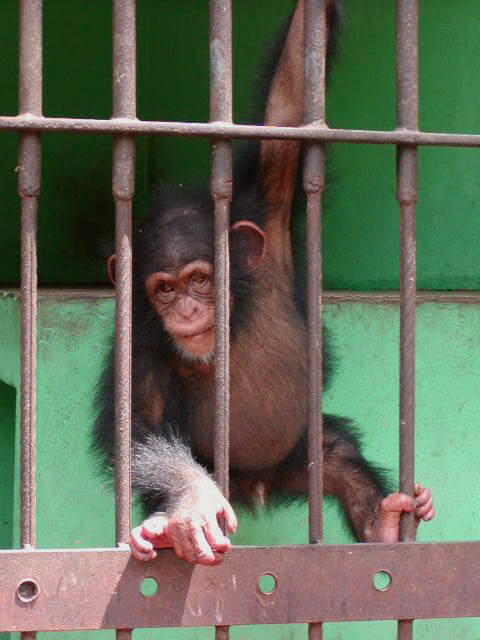
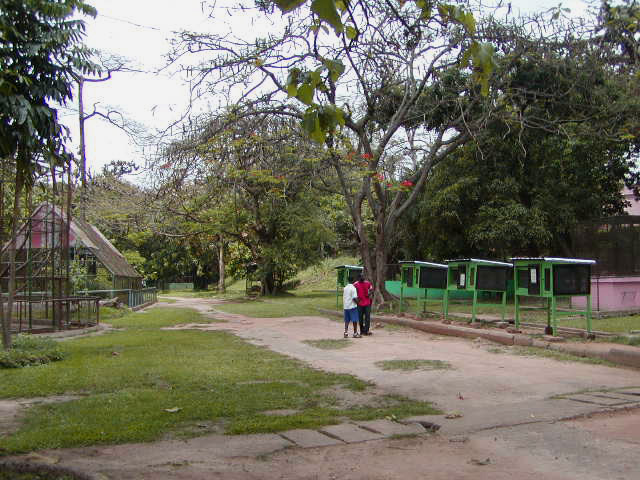
Next to the art center is the zoo. We went there but I really felt pity for the animals in the cages. Although workers really tried their best, it really looked like a poor place and many cages where empty because the animals died. Animals that can be seen are monkeys, snakes, birds, gazelles, turtle’s etcetera. The zoo really shouldn't be here, so close to the very busy and polluted road. Hopefully there will be a day the zoo will close down. It's clear that there is not enough money to maintain this zoo.
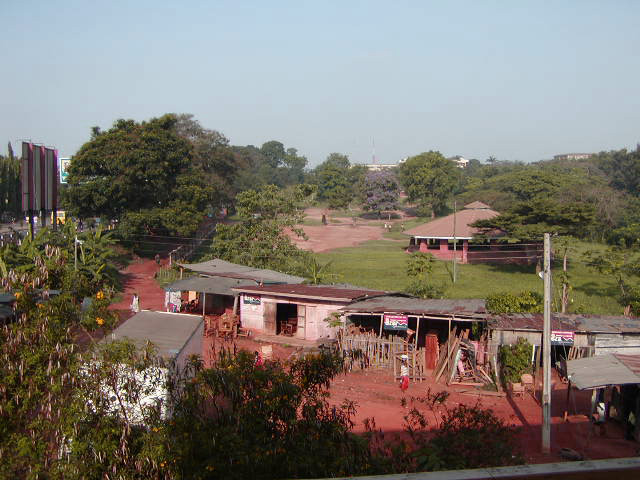
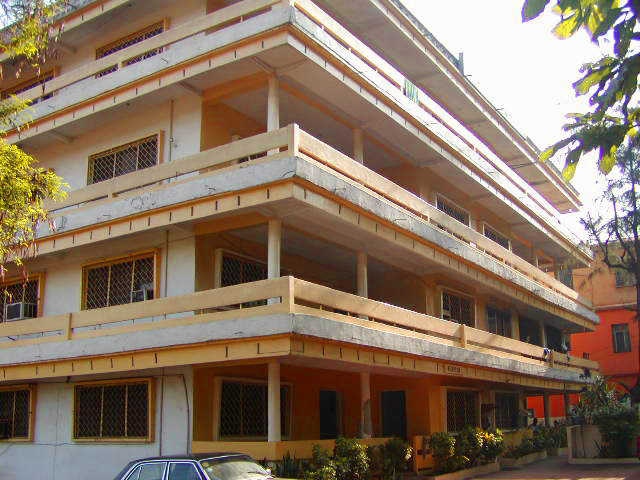
Since it was still early we drove a little bit south to the city. Emmanuel thought we would be able to visit a research center for agricultural crops, but despite a large sign saying 'welcome', we were not so welcome. So we went to the University area. A few students started a small museum in November 2005. They received a large amount of old artifacts. Most of the displays were items that once were used in daily live. Many of the things, like pots, don't have decoration. There is not much written down of the history of the country, so the way people lived should be concluded from the things they used. Also the bars in front of the windows where handmade. The student that showed me around said they were trying to write down as much as possible about the history, so the gained knowledge won't get lost. The initiative is good, but they still have a long way to go.
Since there was not much more to see, we drove back to the hotel, where I relaxed. Around 3.30 pm, a tropical rain poured down from the sky, which resulted in some clean air. I had my dinner around 7.30 pm at the hotel. While I was eating, the electricity broke down. It took some time to start up the generator. After some reading I went to bed.
Initial publication: 14 augustus 2008
Last update: 05 april 2010
© A. Heeroma
Click photo to enlarge