Day 7: Donderdag 3 oktober 2013
Rantepao

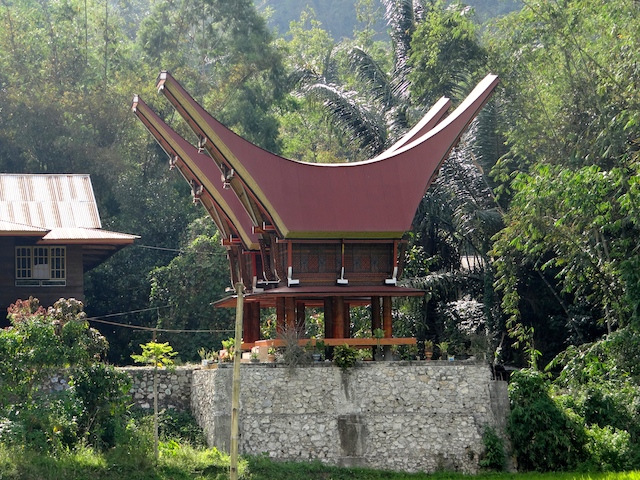
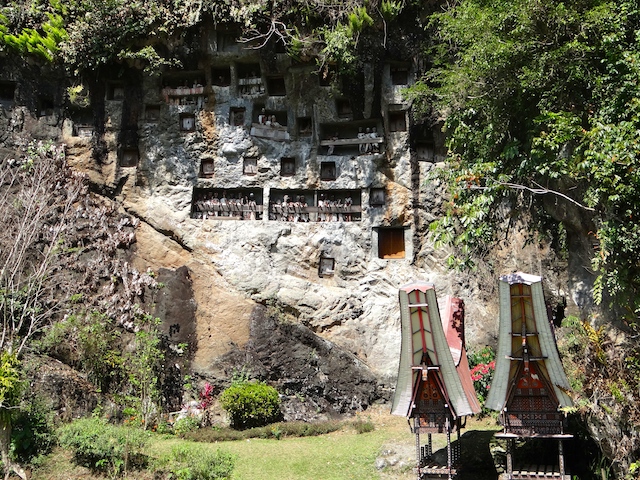
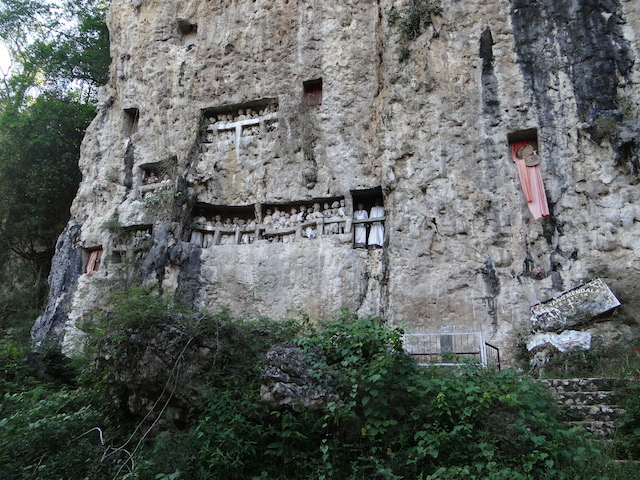
For a change I did not need to pack my bag. After breakfast we depart around 9 AM. Tony had arranged a guide who would show me (for 300,000 rupiah) a part of the Toraja country. His name is Daniel. He told about Toraja land that it has a southern and northern part. We left from 800 meters above sea level, but the mountains are going up to 1100 meters. There is a lot of rice. For years people thought that Toraja was the only country, but that their ancestors came by boat, hence the homes are in the shape of a boat. We drove to the south and first visited Buntu Pone, where around the rice fields and also sweet potatoes, there are rock walls with burial chambers. The rooms are carved into the rocks and belong to a family from the grandparents to grandchildren. The rock walls are decorated with Toa Toa statues, which often depict the deceased. Many of those images were stolen after 1949 (independence). Before that time, there was a strict regulation, which for a thief meant a disrespect full death. A thief was first dragged through the village so that everyone knew who the thief was, and then, with a stone around the neck, thrown in the river where drowning followed. The people were buried in the rocks because it was believed that by a funeral in the ground the earth became infected. Another reason was that the ground than no longer available for agriculture. The caves in the rocks were closed with a wooden door of which only 1 person in the family had the key. This was because in the tombs often valuables were placed for the deceased. It is believed that the deceased needed those for the trip to paradise. There are many souvenir shops and at some you could see how the wooden Tao Tao statues were made.
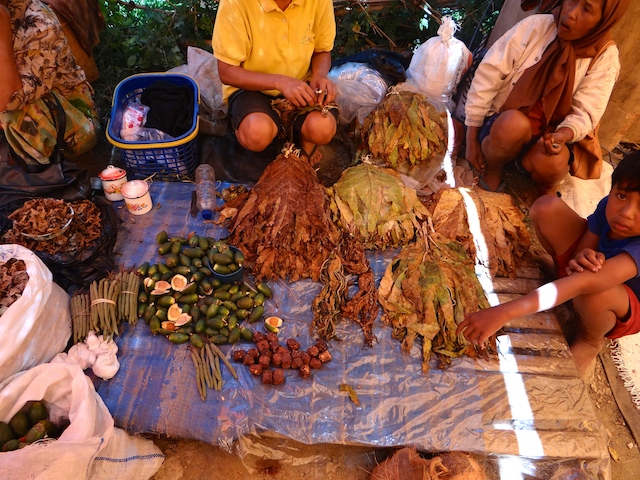
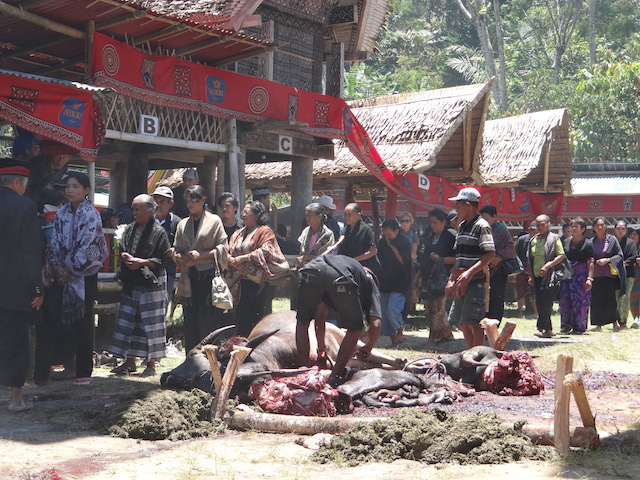
We drove on to Ba'tan, where even more burial chambers are. After we had visited in the mountains a pretty big market, we drove to a funeral ceremony. This is a big event, in which a good number of buildings are built, at least if the family has money. Often a person who died is not directly buried, but kept at home, albeit in embalmed State, until the family has enough money for the ceremony. In this case, it was a woman who had died in 2012. Except building areas to receive guests, there is also a kitchen area and a high-rise where the deceased is positioned so that is higher than the guests. There are also many Buffalo and pigs slaughtered. The ceremony lasts 4 to 5 days. Buffalo meat is distributed among the poor people of the community. Also, the meat is prepared on the spot. No one should be hungry. Guests are expected to bring gifts for the family. Pigs are given, but it may also include cigarettes. Much is happening during such a ceremony and attending was well worth it. The Toraja people believe that after the death the life goes on in a paradise. The more luxurious the funeral, the better the status in this paradise.
In general there are four classes. The Golden stick means you're noble, silver that you are rich, but not of nobility, bamboo belongs is the middle class and the lowest class is being a that slave, which means that you are poor and belong to someone of the silver or gold stick. If you are slave, you only could get rid of it if there is family that pays for your debts. The classification signal communication is nowadays less strictly, because many now also adhere to the Christian faith, but the class difference is still present.
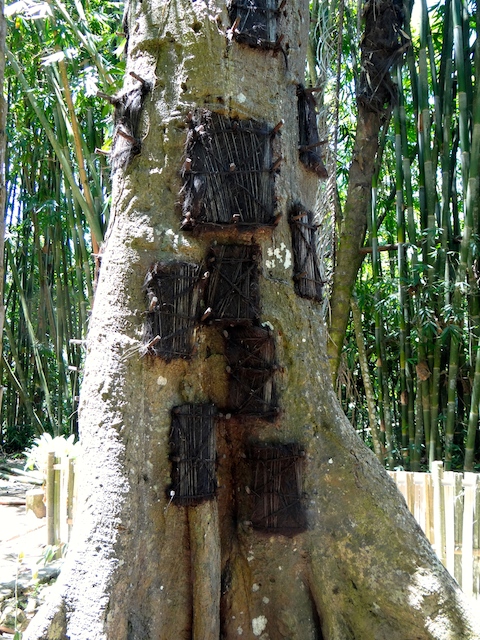
After a lunch break, we visited the baby tree. Herein lie buried babies less than 6 months old. They are still considered sacred. The babies were buried in the tree holes that grow again so the bones become a part of the tree. The baby funeral was always opposite of the village, so that the spirit of the baby could not find the way to the village, because that would bring misfortune. The family remains up to 3 days around the tree after the funeral. There are stories that sometimes light came from the grave and the man who saw it would then be able to perform black magic. A woman, who sees the light, would soon die. Nowadays there are few babies who are buried, because there is good medical care now. In the past that was not so.
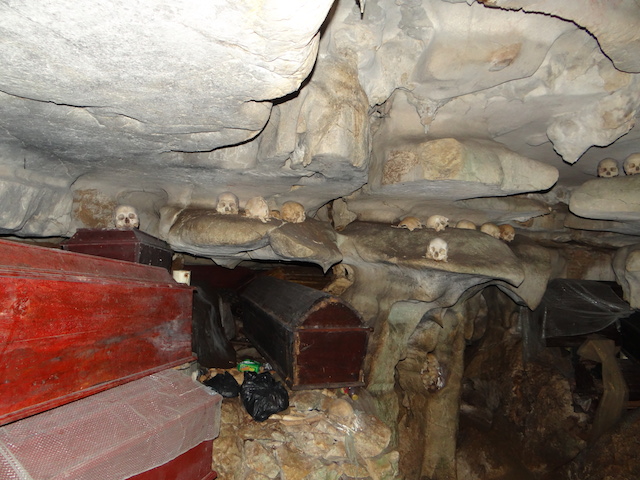
We also visited another location where the dead are buried in natural caves.
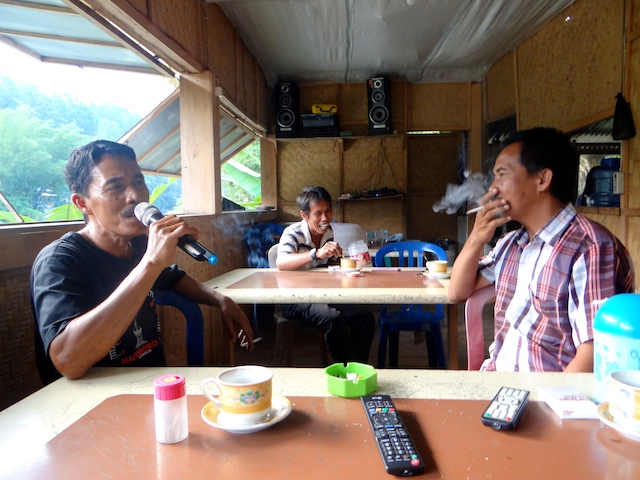
Then we drove to the home of Daniël who proudly demonstrated his karaoke set. Both he and his wife could sing pretty well. After an hour of listening, we drove back to Rantepao. I said goodbye to Daniël.
After some rest I went eating at a restaurant (Ares) on the main street, where I met the two Dutch people again with whom I regularly spent some time recent days and who also stay in the same hotel. They were just finished eating. Also I found a group of Czechs, which I encountered today. I moved at their table and we chatted for a while. Back to the hotel after dinner I checked my email and did some internet browsing. After watching some TV I fell asleep.
Initial publication: 27 oktober 2013
Last update: 01 december 2013
© A. Heeroma
Click photo to enlarge